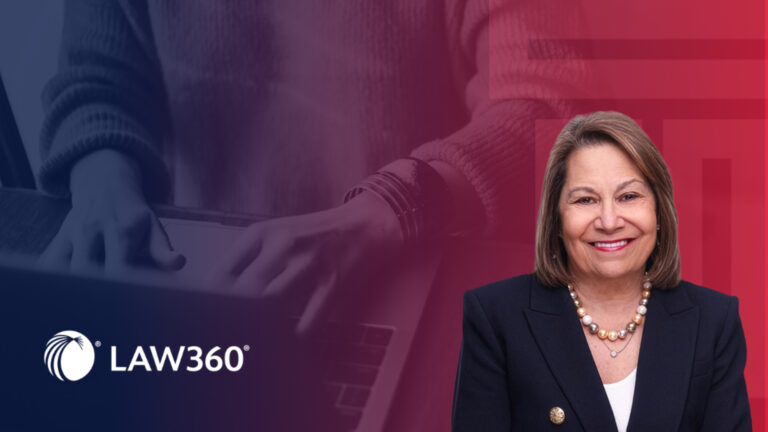

In her recent Law360 article, CM Law Partner Courtney Lytle Sarnow explains why the U.S. Supreme Court’s unanimous decision in Cox Communications Inc. v. Sony Music Entertainment is far less disruptive than many commentators initially suggested.
Despite predictions that the ruling would dramatically limit copyright enforcement against internet service providers (ISPs), the Court ultimately reaffirmed longstanding principles of secondary copyright liability rather than creating new protections or new liabilities.
The case stemmed from a $1 billion verdict against Cox Communications tied to copyright infringement committed by subscribers using its internet services. While lower courts had expanded theories of contributory liability based on an ISP’s knowledge of infringement, the Supreme Court rejected that approach and emphasized that established legal standards still govern.
As Sarnow explains, contributory infringement requires more than mere knowledge that infringement may occur. The Court reaffirmed that liability generally depends on material contribution to infringement, such as overt inducement or designing services specifically for infringing purposes. Because Cox’s internet service has substantial lawful uses — much like the VCR in the landmark Sony Corp. v. Universal City Studios, Inc. case — the Court found no basis for expanded secondary liability.
The ruling also leaves intact the protections established under the Digital Millennium Copyright Act (DMCA). Although Cox itself did not qualify for DMCA safe harbor protections due to deficiencies in its repeat infringer policy, the Court declined to treat that failure as evidence of liability.
According to Sarnow, the decision reinforces a central principle: courts should not create new copyright liability doctrines absent congressional action. If broader ISP liability is to exist, Congress — not the judiciary — must amend the Copyright Act.
The article also highlights broader industry implications. Entertainment companies hoping to pursue large-scale ISP litigation may need to reassess their strategies, while ISPs gain greater certainty that traditional legal standards remain in place. At the same time, Sarnow notes that rapid technological change — especially AI-related copyright challenges — is increasing pressure for comprehensive modernization of U.S. copyright law.
If you have questions about the implications of this Supreme Court decision for your business, please reach out to Courtney directly at csarnow@cm.law.
CM Law (cm.law) – formerly Culhane Meadows – is the largest national, full-service, women-owned & managed (WBE) law firm in the United States. Designed to provide experienced attorneys with an optimal way to practice sophisticated law while maintaining a superior work/life balance, the firm offers fully remote work options, a transparent, merit and math-based compensation structure, and a collaborative culture. Serving a diverse clientele—from individuals and small businesses to over 40 Fortune-ranked companies—CM Law is committed to delivering exceptional legal services across a broad spectrum of industries.
The foregoing content is for informational purposes only and should not be relied upon as legal advice. Federal, state, and local laws can change rapidly and, therefore, this content may become obsolete or outdated. Please consult with an attorney of your choice to ensure you obtain the most current and accurate counsel about your particular situation.